
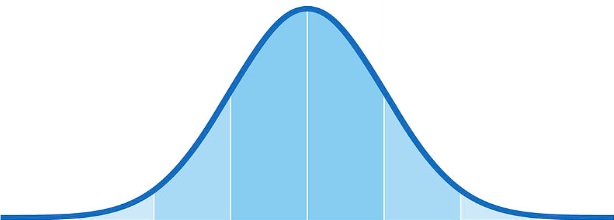
 Employee and customer experience follows a bell curve. At one end are those who are deeply dissatisfied. At the other are those who are highly satisfied or delighted. In the middle sits the largest group — people who feel mildly frustrated, uncertain, indifferent, or cautiously satisfied.
This group is the Invisible Majority.
They are not disengaged enough to complain and not enthusiastic enough to praise. Over time, many stop responding to surveys altogether.
Traditional surveys unintentionally push this group out. Numeric rating scales require people to translate emotion into logic, which is emotionally exhausting. When responses rarely lead to visible action, participation drops further.
What remains is a distorted data set dominated by extremes. Leaders hear from the loudest voices while missing the experiences that actually determine retention, loyalty, and performance.
This is dangerous because the Invisible Majority is the most influenceable group. Small changes in their experience can prevent escalation, reduce churn, and build trust. Yet traditional feedback tools make them invisible.
Morphii changes this by allowing people to express how they feel directly and indicate emotional intensity intuitively. There is no need to choose between numbers that don’t reflect lived experience.
Because Morphii captures continuous emotional data, it preserves nuance. Low-intensity frustration looks different from high-intensity frustration, and that difference matters.
When integrated into RavenCSI, emotional data becomes actionable. Leaders can segment feedback by emotional cohort and use AI to understand what is driving each group’s experience.
Low-intensity frustration can be addressed early through small improvements. Emotional neutrality can be explored and energized. Quiet disengagement can be surfaced before it turns into attrition.
Restoring visibility into the Invisible Majority restores leadership confidence. Decisions become proportional, targeted, and grounded in how people actually feel.
